


Researchers survey rural residents’ Internet usage in Aotearoa, New Zealand’s northern island
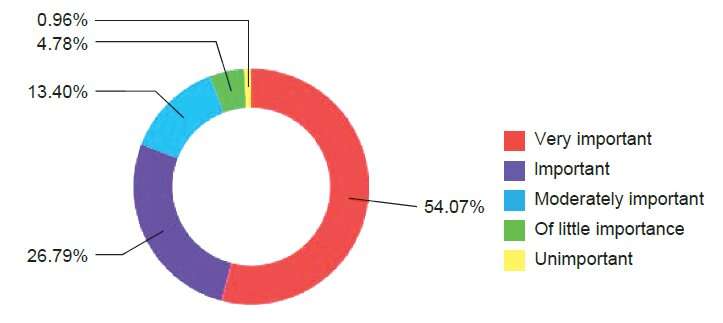
Several years ago, the government of Aotearoa New Zealand undertook an initiative to provide Internet access throughout the country. To observe the status of broadband adoption and usage in the rural areas, a group of final year research and development (R&D) undergraduate students with their supervisors conducted a statistical survey of broadband availability, quality and adoption.
The Aotearoa New Zealand government’s Rural Broadband Initiative was investing 400 million New Zealand dollars to provide 99 percent of the country with access to 50 Mbps peak broadband speed, with the remaining 1 percent of the country at 10 Mbps, by the year 2025. By 2017, the stage 1 of the initiative was completed. The research team set out to study and observe the level of usage, proficiency, and productivity achieved with the broadband installation the initiative had completed.
The research team conducted a survey to learn whether the rural residents and their communities are making good use of the new fast broadband connections. The survey was conducted between February and July 2018, with the data collected from 217 rural residents from New Zealand’s North Island. The team conducted the hybrid face-to-face and online questionnaires with rural Internet users to gather the survey information.
Their survey results showed that while providing the technology infrastructure is the first step, the technology alone is not enough.
“Internet skills in-depth training and education need to catch up with the infrastructure deployment, which is useful to fuel the digital productivity and inclusion for booming rural economies,” said Dr. Ming (Simon) Xiang, who is the graduate of Auckland University of Technology, New Zealand and had mainly finalized the survey technical report. He is now with the South China University of Technology, and also with the Ministry of Natural Resources, People’s Republic of China.