


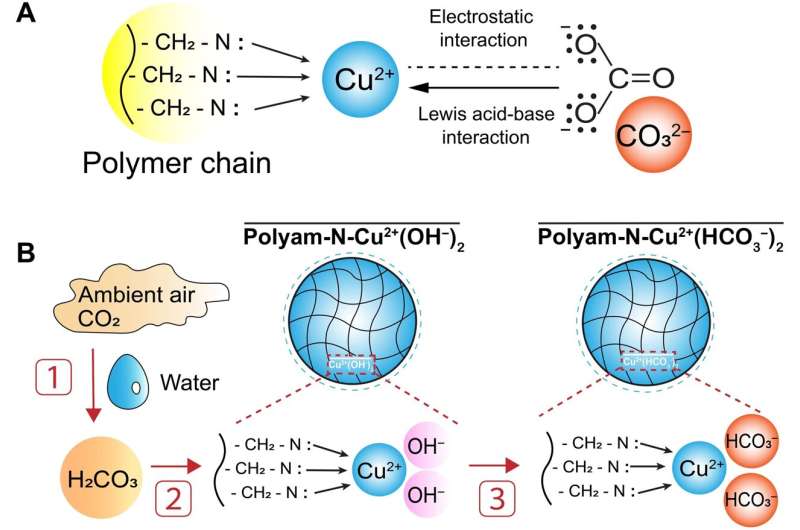
A team of environmental engineers at Lehigh University working with a colleague from Georgia Tech Shenzhen Institute has developed a direct air capture (DAC) device for removing CO2 from the air. The results are published in the journal Science Advances. As climate change progresses, scientists around the world are working to prevent global disaster.
A team of environmental engineers at Lehigh University working with a colleague from Georgia Tech Shenzhen Institute has developed a direct air capture (DAC) device for removing CO2 from the air. The results are published in the journal Science Advances. As climate change progresses, scientists around the world are working to prevent global disaster.
A team of environmental engineers at Lehigh University working with a colleague from Georgia Tech Shenzhen Institute has developed a direct air capture (DAC) device for removing CO2 from the air. The results are published in the journal Science Advances. As climate change progresses, scientists around the world are working to prevent global disaster.
A team of environmental engineers at Lehigh University working with a colleague from Georgia Tech Shenzhen Institute has developed a direct air capture (DAC) device for removing CO2 from the air. The results are published in the journal Science Advances. As climate change progresses, scientists around the world are working to prevent global disaster.
A team of environmental engineers at Lehigh University working with a colleague from Georgia Tech Shenzhen Institute has developed a direct air capture (DAC) device for removing CO2 from the air. The results are published in the journal Science Advances. As climate change progresses, scientists around the world are working to prevent global disaster.
A team of environmental engineers at Lehigh University working with a colleague from Georgia Tech Shenzhen Institute has developed a direct air capture (DAC) device for removing CO2 from the air. The results are published in the journal Science Advances. As climate change progresses, scientists around the world are working to prevent global disaster.
A team of environmental engineers at Lehigh University working with a colleague from Georgia Tech Shenzhen Institute has developed a direct air capture (DAC) device for removing CO2 from the air. The results are published in the journal Science Advances. As climate change progresses, scientists around the world are working to prevent global disaster.
A team of environmental engineers at Lehigh University working with a colleague from Georgia Tech Shenzhen Institute has developed a direct air capture (DAC) device for removing CO2 from the air. The results are published in the journal Science Advances. As climate change progresses, scientists around the world are working to prevent global disaster.
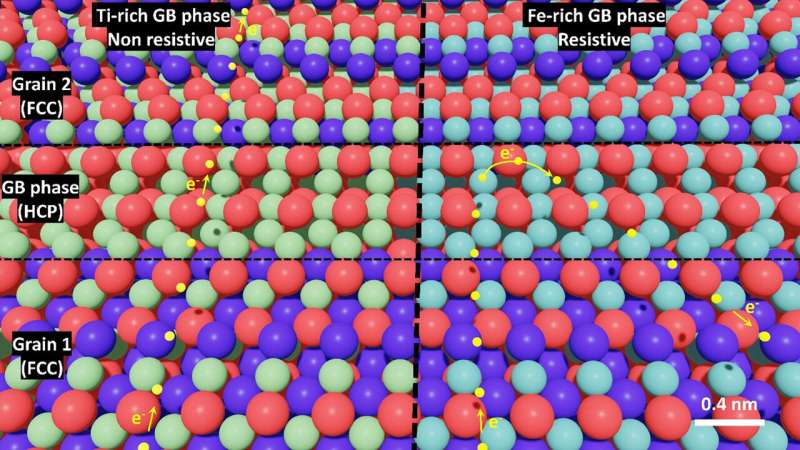
In times when energy is scarce and sustainable ways of energy production are being explored, thermoelectric materials are being considered for power generation to transform waste heat into electricity. However, to make this transformation more efficient, and thus usable on an industrial scale, a better understanding of the functional and