


Here is how demand aggregation can improve rooftop solar installation in India
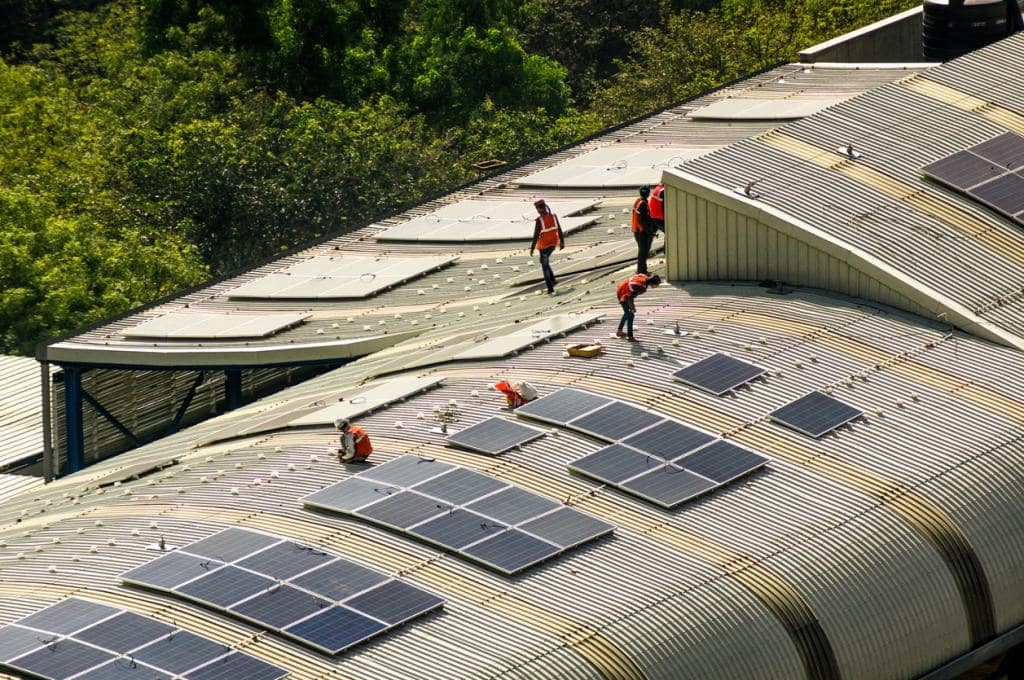
Demand aggregation can address the main challenges to RTS deployment — low end-user awareness & increased consumer acquisition price for project developersIndia achieved 8.07 gigawatts of rooftop solar (RTS) installations by December 2022, out of the 40 GW of the target the Centre had set. The low deployment can be due to several reasons, such as the absence of financial access, lack of interest by distribution utilities and lack of performance guarantees.
This makes it necessary to recognise business models for their increased deployment and identify suitable capitalist ventures for adopting rooftop solar.
The Government of India aims to achieve 500 GW of renewable energy deployment by 2030. The Forum of Regulators had approved the business models for power distribution companies in their report Metering Regulations and Accounting Framework for Grid Connected Rooftop Solar PV in India, which are as follows:
- Consumer-owned (utility-only aggregates): In this model, the distribution utility plays the aggregator role by facilitating the installation of RTS for the end-user. Once the demand has been aggregated, the distribution utility starts reverse bidding to deliver engineering, procurement and construction (EPC) services for the demand aggregated. The end-user must finance the capital expenses.
- Consumer-owned (utility aggregates and acts as EPC player): In this model, the end-user and the distribution utility sign an EPC agreement to install RTS. The distribution utility signs another contract with the EPC player, who is selected based on reverse bidding. The distribution utility gets returns based on a one-time facilitation fee and an allowance on successive EPC contracts.
- Third party-owned (utility aggregates and acts as an agent between renewable energy service company (RESCO) and the end-user): In this model, the distribution utility aggregates the demand in the distribution area, and through reverse bidding, the RESCO is selected. Financing is done through the distribution utility and the distribution utility signs a power purchase agreement (PPA) with the RESCO and the end-user. The distribution utility charges trading amounts for easing trading alternatives.
- Utility-owned (distribution utility aggregates and works as RESCO): The distribution utility installs, owns and operates the rooftop solar projects in this model. PPA is signed between the distribution utility and the end-users, and the EPC agreements are finalised between the distribution utility and the EPC organisations.
The distribution utilities can work towards demand aggregation and improve the deployment of the RTS through a systematic approach.
States have taken up measures to promote rooftop solar such as production-linked incentives, additional subsidies, net metering regulations and demand aggregation for the combined deployment of RTS. By December 2022, Gujarat had the maximum RTS installation capacity of 2,206 megawatts, followed by Maharashtra with 1,385 MW, Rajasthan with 835 MW, Haryana with 418 MW and Karnataka with 400 MW.
Some of the policy measures taken by states towards the deployment of rooftop solar have been mentioned below:
1. Delhi Solar Policy 2016 and Mukhya Mantri Solar power Yojana for Domestic
(Residential) Sector Consumers in NCT of Delhi:
- The Delhi government provided a generation-based incentive (GBI) of Rs 2 per unit for the solar power produced between FY 2017 and FY 2019. This GBI has been extended for five years from FY 2020
- The Energy Efficiency and Renewable Energy Management Centre executed the project through Indraprastha Power Generation Company Ltd (IPGCL)
- The project was relevant to the domestic sector’s current and subsequent net meter connections
- The minimum requirement for GBI was 1,100 kilowatt-hours solar units produced per annum per kWp to 1,500 kWh per annum per kWp
In 2018 and 2019, IPGCL undertook demand aggregation for rooftop solar from government buildings, residential users and residential societies.
2. Amendment to Goa State Solar Policy
The Government of Goa released an amendment to its state solar policy of 2017 on February 7, 2019 and appointed Goa Energy Development Agency (GEDA) as the state nodal agency.